


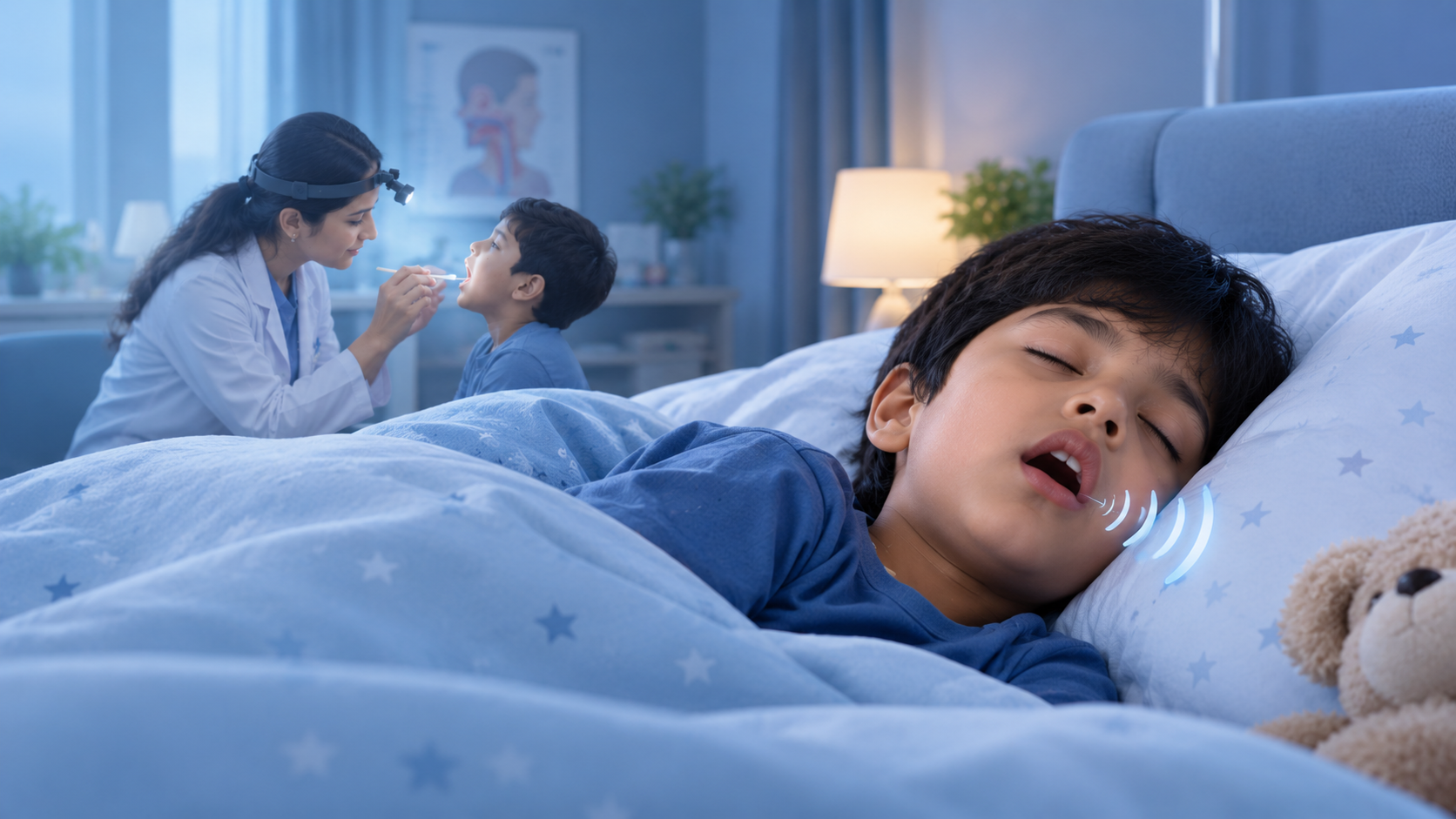
Why Does My Child Snore Every Night? Signs of Sleep Apnea and When to See a Pediatric ENT in Nagpur
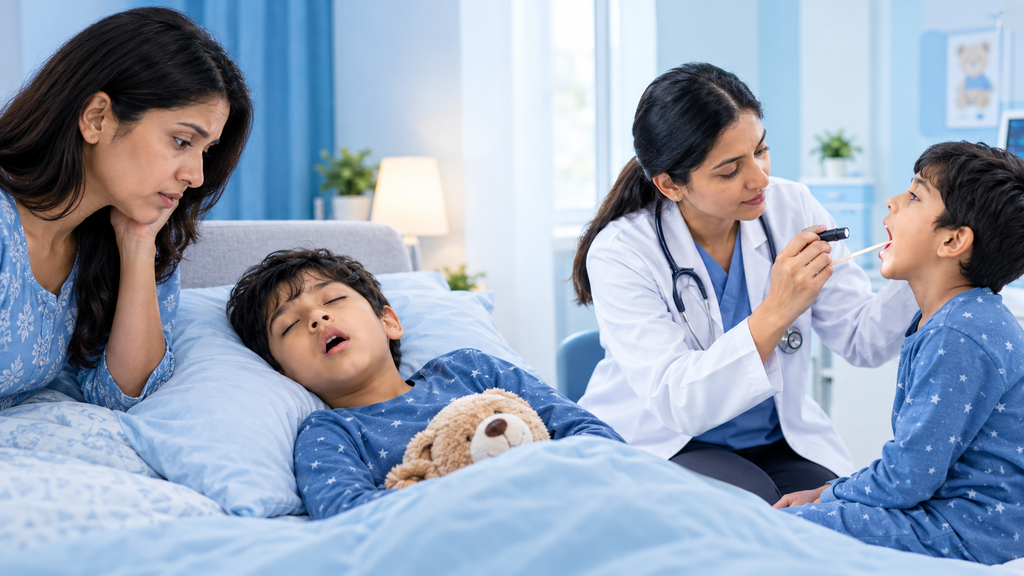
- “My child snores almost every night. Is that normal?”
- “He sleeps with his mouth open. Should I be worried?”
- “Sometimes I notice pauses in my child’s breathing during sleep. Could it be sleep apnea?”
These are important questions because occasional snoring can happen in children, particularly during illnesses or nasal congestion. But frequent snoring, breathing pauses or disturbed sleep should not simply be dismissed as normal.
The National Heart, Lung, and Blood Institute lists snoring, mouth breathing, breathing that starts and stops, frequent waking and bedwetting among symptoms of sleep apnea in children. Daytime signs can include attention difficulties, sleepiness and behavioural problems.
For families searching for a pediatric ENT in Nagpur, Colours Hospital provides neonatal and pediatric ENT services, including care related to tonsils, adenoids, airway problems and sleep apnea.
Is Snoring Normal in Children?
Occasional snoring does not necessarily mean a child has a sleep disorder.
A blocked nose, cold or temporary congestion can make breathing noisy during sleep.
The concern is greater when snoring is:
- Frequent
- Loud
- Happening most nights
- Associated with mouth breathing
- Accompanied by pauses in breathing
- Associated with restless sleep
- Followed by daytime behavioural or concentration problems
A child who regularly snores deserves attention when other symptoms are also present.
What Is Sleep Apnea in Children?
Sleep apnea is a condition in which breathing repeatedly stops or becomes restricted during sleep.
In children, obstructive sleep apnea is commonly related to blockage or narrowing of the upper airway.
The NHLBI notes that sleep apnea can occur at any age and is most common among children between ages 2 and 8.
It is important to understand that:
Snoring alone does not prove that a child has sleep apnea.
A medical evaluation is needed to determine what is causing the child’s symptoms.
What Are the Signs of Sleep Apnea in Children?
Night-Time Signs
Parents may notice:
- Loud snoring
- Mouth breathing
- Breathing pauses
- Gasping
- Restless sleep
- Frequent waking
- Unusual sleeping positions
- Bedwetting in some children
These symptoms are recognised by the NHLBI as possible signs of sleep apnea in children.
Daytime Signs
A child may also have:
- Difficulty concentrating
- Problems paying attention at school
- Sleepiness
- Irritability
- Behavioural changes
- Overactivity
Interestingly, children with sleep apnea may not always look sleepy during the day; some can instead appear unusually active or have behavioural difficulties.
Why Does My Child Snore While Sleeping?
There can be several possible causes.
- Enlarged Tonsils or Adenoids
Large tonsils or adenoids can narrow the upper airway.
Colours Hospital’s pediatric ENT service specifically includes tonsillectomy and adenoidectomy for conditions including pediatric sleep apnea.
- Nasal Blockage
Allergies, congestion or anatomical nasal problems may interfere with comfortable breathing.
- Airway Problems
Some children may have structural or congenital airway conditions that affect breathing.
- Other Medical Factors
A child’s overall health, weight, muscle tone and other medical conditions can also influence sleep-disordered breathing.
A professional assessment is therefore more useful than assuming that every child who snores simply has enlarged tonsils.
How Can Parents Tell the Difference Between Simple Snoring and Sleep Apnea?
This is one of the most important questions.
- Occasional Snoring
Occasional snoring during a cold may settle as the congestion improves.
- Concerning Snoring
Snoring becomes more important to evaluate when it is frequent and accompanied by:
- Breathing Pauses
You notice periods when breathing appears to stop and then restart.
- Gasping or Choking
The child appears to struggle for breath while sleeping.
- Mouth Breathing
The child consistently sleeps with an open mouth.
- Poor-Quality Sleep
The child tosses and turns or wakes frequently.
- Daytime Changes
There are attention, behavioural or learning difficulties.
When these signs occur together, discuss them with a pediatrician or pediatric ENT.
Can Sleep Apnea Affect a Child’s Daytime Behaviour?
Yes. The NHLBI notes that children with sleep apnea may experience attention problems and behavioural difficulties.
This is one reason parents sometimes misunderstand the problem.
They may think: “My child is simply hyperactive.”
But if the child also snores heavily or has disturbed sleep, sleep-disordered breathing should be considered as one possible explanation.
That does not mean every behavioural problem is caused by sleep apnea.
It means sleep quality deserves attention when the symptoms fit.
Does Every Child Who Snores Need a Sleep Study?
No. The need for testing depends on the child’s symptoms and clinical assessment.
The NHLBI states that a sleep study can help diagnose sleep apnea and determine its type and severity. Healthcare providers may also examine the nose and mouth for enlarged tonsils or other airway-blocking structures.
The doctor may therefore decide what investigation is appropriate after examining the child and understanding the sleep symptoms.
What Should Parents Observe Before the Appointment?
Parents can make the consultation more useful by observing:
- How Often Does the Child Snore?
Every night, several nights a week, or only during colds?
- Does the Child Breathe Through the Mouth?
Note whether mouth breathing occurs throughout sleep.
- 3Are There Breathing Pauses?
If safely possible, parents may note what they observe rather than trying to diagnose the condition themselves.
- Does the Child Wake Frequently?
Look for restlessness or disrupted sleep.
- How Is the Child During the Day?
Pay attention to sleepiness, irritability, concentration or behavioural changes.
A short note of these patterns can be useful during an ENT consultation.
When Should Parents See a Pediatric ENT in Nagpur?
Consider a professional assessment if your child:
- Snores regularly
- Snores loudly
- Mouth-breathes during sleep
- Appears to stop breathing
- Gasps or chokes at night
- Has restless or disrupted sleep
- Has unexplained daytime sleepiness or concentration problems
- Has persistent ENT problems affecting sleep
The concern becomes more important when multiple symptoms occur together.
What Does Pediatric ENT Care for Snoring Involve?
An ENT assessment may include:
- Medical History
The specialist asks about snoring, sleep pattern, breathing and other symptoms.
- Examination
The nose, throat and airway may be examined.
- Tonsils and Adenoids
The doctor may assess whether enlarged tonsils or adenoids could be contributing to airway obstruction.
- Additional Testing
Further evaluation or sleep testing may be recommended depending on the symptoms.
- Treatment Planning
Treatment depends on the underlying cause and severity.
It is not correct to assume that every child with snoring needs surgery.
How Colours Hospital Supports Pediatric ENT and Sleep-Related Concerns
Colours Hospital’s Neonatal & Pediatric ENT Surgery service in Nagpur includes evaluation and treatment of ENT conditions affecting breathing, hearing and speech.
Its listed pediatric ENT services include:
- Tonsillectomy and adenoidectomy
- Myringotomy with ear tubes
- Congenital airway surgery
- Sinus surgery
- Head and neck mass removal
- Hearing-related procedures
The hospital specifically lists tonsil and adenoid surgery among treatments addressing pediatric sleep apnea.
For children who need broader pediatric support, Colours also has Neonatal & Pediatric Intensive Care and a range of pediatric specialties.
Can Childhood Snoring Affect School Performance?
Poor-quality sleep can affect attention and daytime functioning.
The NHLBI identifies attention difficulties and behavioural problems among possible daytime symptoms of pediatric sleep apnea.
Therefore, if a child is struggling at school and also snores frequently, it can be helpful to discuss both issues with the pediatrician.
Do not assume that poor academic performance is caused by sleep apnea, but do not ignore chronic sleep symptoms either.
What Should Parents Not Do?
- Do Not Ignore Persistent Loud Snoring
Especially when other symptoms are present.
- Do Not Diagnose Sleep Apnea at Home
Snoring is a symptom, not a diagnosis.
- Do Not Assume Surgery Is Always Required
Treatment depends on the cause and clinical assessment.
- Do Not Rely Only on Smartphone Recordings
A recording may help demonstrate what parents observe, but it cannot replace a medical evaluation or sleep study when one is indicated.
Frequently Asked Questions
1. Is it normal for children to snore every night?
Regular loud snoring should be discussed with a healthcare professional, particularly if it occurs with mouth breathing, breathing pauses, restless sleep or daytime behavioural and attention problems.
2. What are the signs of sleep apnea in children?
Possible signs include loud snoring, mouth breathing, breathing pauses, waking frequently, bedwetting, daytime sleepiness and attention or behavioural problems.
3. Why does my child sleep with their mouth open?
Mouth breathing can happen for several reasons, including nasal obstruction or enlarged tonsils/adenoids. Persistent mouth breathing during sleep should be evaluated when it is accompanied by snoring or other symptoms.
4. Can enlarged tonsils cause snoring in children?
Enlarged tonsils and adenoids can contribute to airway obstruction and sleep apnea in children. Colours Hospital’s pediatric ENT service specifically lists tonsillectomy and adenoidectomy for pediatric sleep apnea.
5. Does every child who snores have sleep apnea?
No. Snoring can have several causes, and not every child who snores has sleep apnea.
6. Do children with sleep apnea always feel sleepy?
No. Some children may instead show attention problems, irritability, overactivity or other behavioural changes.
7. Does a child with sleep apnea need a sleep study?
A sleep study may be recommended when clinically appropriate. It can help diagnose sleep apnea and determine its severity.
8. When should I take my child to an ENT for snoring?
Consider an ENT consultation when snoring is persistent or loud, especially if there are breathing pauses, gasping, mouth breathing, poor sleep or daytime symptoms.
9. Where can I find pediatric ENT treatment in Nagpur?
Colours Hospital provides Neonatal & Pediatric ENT services in Nagpur, including evaluation and treatment of pediatric airway and sleep-related ENT conditions.
10. Can sleep apnea affect a child’s learning?
Poor sleep can affect attention and daytime functioning, and attention problems are recognised among possible symptoms of pediatric sleep apnea.
Final Takeaway
A child who occasionally snores during a cold may not have a serious problem.
But persistent snoring, mouth breathing, breathing pauses or disrupted sleep should not simply be ignored.
The important question is not only:
“Does my child snore?”
It is:
“Is my child’s breathing during sleep affecting sleep quality and daytime wellbeing?”
For parents searching for sleep apnea treatment in Nagpur or a pediatric ENT in Nagpur, Colours Hospital offers pediatric ENT evaluation and treatment, including care for tonsils, adenoids and airway-related conditions.
Book a consultation with Colours Hospital if persistent snoring or sleep-related breathing problems are concerning you.
