


What Are the Warning Signs During Pregnancy That Need Immediate Medical Attention?
Pregnancy is an important time for regular medical care, but not every symptom during pregnancy means something is wrong. At the same time, some symptoms should not be ignored or managed at home without medical advice.
Expectant mothers and their families often ask:
“Which symptoms are normal during pregnancy?”
“When should I call my gynecologist?”
“Is bleeding during pregnancy dangerous?”
“What should I do if the baby is moving less?”
“When should I go to the hospital during pregnancy?”
Knowing the warning signs can help pregnant women seek timely medical attention when necessary.
The World Health Organization recommends regular pregnancy care and awareness of danger signs such as bleeding, severe abdominal pain, severe headache, fever and swelling.
At Colours Hospital, Nagpur, the Gynecology & Obstetrics department provides pregnancy care including preconception counselling, prenatal care, high-risk pregnancy management and postnatal care.
Explore Pregnancy & Obstetrics Care at Colours Hospital
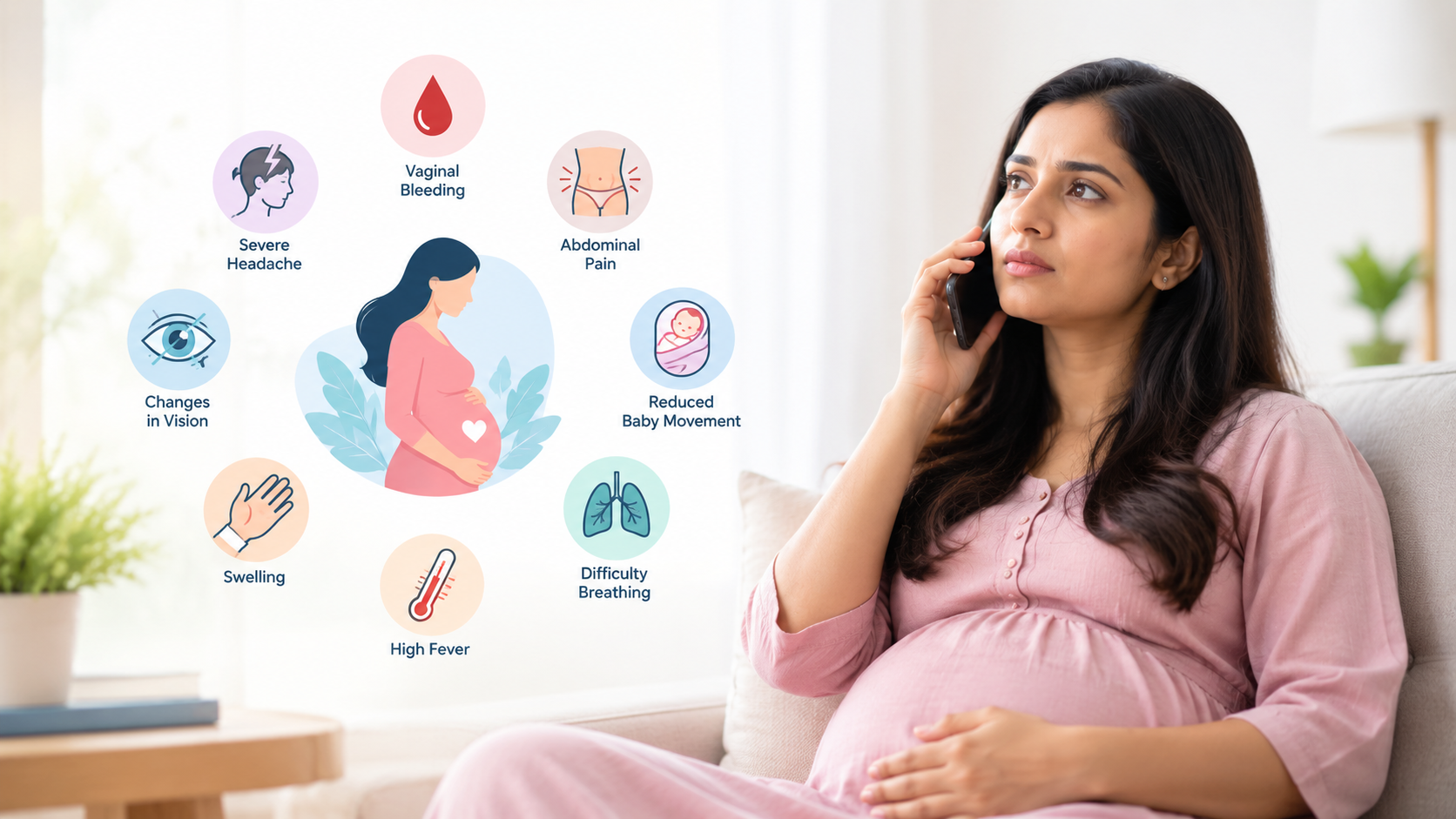
What Symptoms During Pregnancy Should You Not Ignore?
Some pregnancy symptoms need immediate medical assessment, particularly when they are sudden, severe, persistent or different from what you normally experience.
Important warning signs include:
- Vaginal bleeding
- Severe or persistent abdominal pain
- Severe headache
- Changes in vision
- Difficulty breathing
- Chest pain
- High fever
- Severe vomiting or inability to keep fluids down
- Sudden swelling of the face or hands
- Significant reduction or stopping of baby’s movements
- Fluid leaking from the vagina
- Seizures or loss of consciousness
- Painful swelling or redness in one leg
These symptoms can have different causes, and not every case indicates a serious complication. However, they warrant medical advice or assessment rather than being ignored.
1. Is Vaginal Bleeding During Pregnancy Normal?
Any bleeding during pregnancy should be discussed with a healthcare professional.
Small amounts of spotting can occur in some situations, particularly early in pregnancy, but heavier bleeding or bleeding associated with pain, dizziness, weakness or other symptoms requires prompt medical assessment.
During later pregnancy, bleeding can be associated with conditions that require urgent obstetric care.
Common question from pregnant women:
“I noticed a little blood but I don’t have pain. Should I wait?”
Do not make that decision based only on the amount of bleeding. Contact your gynecologist or maternity care provider and explain the timing, amount and any other symptoms.
2. When Is Abdominal Pain During Pregnancy Concerning?
Mild discomfort can occur during pregnancy as the body changes. But severe, persistent or worsening abdominal pain should be assessed.
Seek medical advice particularly when abdominal pain is accompanied by:
- Vaginal bleeding
- Severe back pain
- Dizziness or fainting
- Fever
- Vomiting
- Contractions
- Fluid leakage
Severe abdominal pain is included among urgent maternal warning signs by the American College of Obstetricians and Gynecologists (ACOG).
Patient question:
“How do I know whether pregnancy pain is normal or needs a doctor?”
There is no single pain level that can safely be used for everyone. The location, severity, duration, timing and associated symptoms matter, which is why persistent or severe pain deserves professional assessment.

3. Is a Severe Headache During Pregnancy a Warning Sign?
A headache can occur during pregnancy for many reasons, but a severe headache that does not go away or becomes worse should not be ignored.
It is especially important to seek medical advice if the headache occurs with:
- Blurred vision
- Seeing spots or flashing lights
- Dizziness
- Sudden swelling
- Upper abdominal pain
- High blood pressure
- Shortness of breath
These can be warning signs associated with pregnancy complications such as preeclampsia.
Parent/partner question:
“My wife is pregnant and suddenly has a severe headache and blurred vision. Should we wait until her next appointment?”
No. These symptoms should be medically assessed promptly.
4. What Does Sudden Swelling During Pregnancy Mean?
Some swelling, particularly around the feet and ankles, can occur during pregnancy.
However, sudden or marked swelling of the hands or face, particularly when accompanied by headache or changes in vision, can require evaluation.
ACOG identifies extreme swelling of the hands or face as one of the urgent maternal warning signs.
Swelling can have several causes, so it should not automatically be assumed to be preeclampsia. A healthcare professional can assess blood pressure and other relevant findings.
5. What If the Baby Is Moving Less Than Usual?
One of the most important questions during later pregnancy is:
“My baby is moving less than usual. Should I wait?”
A noticeable reduction or stopping of fetal movements should be reported promptly to your maternity care provider.
There is no single movement count that applies equally to every pregnancy. What matters is a change from your baby’s usual pattern. ACOG lists slowing or stopping of fetal movements as an urgent maternal warning sign.
What should a pregnant woman do?
Do not rely on online advice to determine whether reduced movement is safe. Contact your obstetrician or maternity unit promptly and follow their instructions.
6. When Is Vaginal Fluid Leakage During Pregnancy Concerning?
Fluid leaking from the vagina may have different causes. However, a sudden gush or ongoing leakage of fluid during pregnancy should be assessed, particularly near the expected delivery date or when it occurs before term.
The NHS recommends contacting a maternity unit urgently when the waters break, particularly if the fluid is coloured or has an unusual smell, or when it occurs with bleeding or reduced fetal movements.
Common question:
“My underwear keeps getting wet during pregnancy. Is it urine or amniotic fluid?”
It can be difficult to tell from appearance alone. Do not assume the cause. Contact your obstetrician or maternity care team for advice.
7. When Is Fever During Pregnancy a Concern?
A fever during pregnancy should not simply be ignored.
ACOG’s urgent maternal warning signs include a temperature of 100.4°F (38°C) or higher, particularly when accompanied by symptoms such as severe abdominal or back pain, vomiting, urinary symptoms or abnormal vaginal discharge.
If you have a fever during pregnancy, speak with your doctor about the possible cause and appropriate treatment.
Avoid taking medicines during pregnancy without checking whether they are appropriate for you.
8. Can Severe Vomiting During Pregnancy Be Dangerous?
Nausea and vomiting are common during early pregnancy, but severe vomiting that prevents you from keeping food or fluids down may require medical attention.
ACOG advises seeking help when severe nausea and vomiting make it difficult to drink or eat or when signs such as dizziness, confusion or dehydration occur.
Question many first-time mothers ask:
“I am vomiting several times a day and cannot keep water down. Is this just morning sickness?”
Severe or persistent vomiting should be discussed with your doctor rather than assumed to be normal morning sickness.
9. What Does One-Sided Leg Swelling or Pain Mean During Pregnancy?
Some swelling can occur during pregnancy, but pain, redness, warmth or swelling in one leg needs medical attention.
ACOG identifies these symptoms as possible warning signs of a blood clot in a vein, which can become serious if a clot travels to the lungs.
Seek urgent medical help if leg symptoms are accompanied by:
- Sudden shortness of breath
- Chest pain
- Rapid heartbeat
- Difficulty breathing
10. What If I Have Trouble Breathing During Pregnancy?
Mild breathlessness can occur during pregnancy, but sudden or significant difficulty breathing requires medical attention.
ACOG lists trouble breathing, chest pain and fast or irregular heartbeat among urgent maternal warning signs.
Do not assume sudden breathing difficulty is simply because the pregnancy is progressing.
11. What Are the Warning Signs of Preeclampsia?
Preeclampsia is a pregnancy-related condition involving high blood pressure and other signs of organ involvement. It can sometimes have few obvious symptoms, which is why regular antenatal monitoring is important.
Possible warning symptoms include:
- Severe or persistent headache
- Vision changes
- Upper abdominal pain
- Sudden swelling of hands or face
- Nausea or vomiting later in pregnancy
- Difficulty breathing
- High blood pressure
WHO and ACOG both identify these symptoms as important warning signs requiring medical attention.
Regular antenatal visits can help healthcare professionals monitor blood pressure and other pregnancy-related health indicators.
Know More About Gynecology & Obstetrics Care at Colours Hospital
12. What Are the Signs That Labour May Be Starting?
As pregnancy approaches the due date, women may notice:
- Regular contractions
- Increasing lower abdominal or back discomfort
- A “show” or mucus plug
- An urge to pass stool
- Water breaking
The timing and pattern of contractions matter, and the signs of labour can differ between women. The NHS recommends contacting the maternity unit when you think labour has started and seeking urgent guidance for signs such as waters breaking, vaginal bleeding or reduced fetal movements.
First-time mother question:
“How will I know when it is time to go to the hospital?”
Your obstetrician or maternity team should provide an individual birth plan, including when to come to the hospital based on your pregnancy and medical history.
What Is High-Risk Pregnancy and Who Needs Closer Monitoring?
Some pregnancies require more frequent or specialised monitoring because of maternal health conditions, pregnancy complications or other clinical factors.
Examples can include pregnancies complicated by:
- High blood pressure
- Diabetes
- Previous pregnancy complications
- Certain medical conditions
- Multiple pregnancy
- Problems identified during pregnancy
- Concerns about fetal growth or wellbeing
A pregnancy being described as “high risk” does not automatically mean that a poor outcome is expected. It means that the pregnancy may need closer monitoring or specialised care.
Colours Hospital states that its Obstetrics department provides high-risk pregnancy management, along with prenatal and postnatal care.
Why Regular Antenatal Check-Ups Matter
Pregnancy care is not only about visiting a doctor when something feels wrong.
Routine antenatal care provides opportunities to:
- Monitor the mother’s health
- Monitor the baby’s development
- Check blood pressure
- Identify risk factors
- Discuss nutrition and lifestyle
- Perform recommended tests
- Identify potential complications
- Plan for delivery
- Discuss postnatal care
WHO recommends contacting a health worker after pregnancy is confirmed and attending recommended pregnancy visits for healthcare, support, advice and information.
When Should You Go to a Maternity Hospital Instead of Waiting for an Appointment?
Seek urgent medical care when pregnancy symptoms are severe, sudden or associated with warning signs.
Examples include:
- Heavy vaginal bleeding
- Severe abdominal pain
- Severe headache with vision changes
- Difficulty breathing or chest pain
- Seizure or loss of consciousness
- Significant reduction or stopping of baby’s movements
- Fluid leaking from the vagina
- High fever with concerning symptoms
- Severe vomiting with dehydration
- Sudden painful swelling of one leg
These are among the warning signs identified by major maternal-health guidance.
What Should You Keep Ready for a Maternity Emergency?
Families can prepare in advance by knowing:
- The hospital’s location
- The obstetrician’s contact details
- Emergency contact numbers
- Previous medical records
- Current medications
- Blood group information
- Transport arrangements
- A basic hospital admission bag as the due date approaches
WHO also recommends having a birth preparedness and complication-readiness plan.
Colours Hospital lists 24/7 availability, maternity/gynecology services and emergency medical care, with the hospital located at Ajni Square on Wardha Road, Nagpur.
Contact Colours Hospital, Nagpur
Frequently Asked Questions
1. What are the danger signs during pregnancy?
Important warning signs include vaginal bleeding, severe abdominal pain, severe headache, vision changes, high fever, breathing difficulty, seizures, fluid leakage and reduced or stopped fetal movements.
2. When should I see a gynecologist during pregnancy?
Regular antenatal visits are important throughout pregnancy. You should also contact your gynecologist whenever you develop a new, severe or worrying symptom rather than waiting for your next scheduled appointment.
3. Is bleeding during pregnancy always dangerous?
Not necessarily, but bleeding during pregnancy should be discussed with a healthcare professional. Heavy bleeding or bleeding associated with pain, dizziness or other concerning symptoms requires prompt assessment.
4. When should I go to the hospital during pregnancy?
Go for urgent assessment when symptoms such as severe pain, heavy bleeding, difficulty breathing, seizure, significant reduction in fetal movement or other serious warning signs occur.
5. Is severe headache normal during pregnancy?
Headaches can occur during pregnancy, but a severe or persistent headache, particularly with blurred vision, swelling or upper abdominal pain, should be medically assessed.
6. What should I do if my baby is moving less than usual?
Contact your maternity care provider promptly. A change in your baby’s usual movement pattern can be important and should not simply be ignored.
7. How do I know if my water has broken?
Waters can break as a gush or a trickle. If you think your waters have broken, contact your maternity care provider for guidance.
8. What are the signs of preeclampsia?
Warning symptoms can include severe headache, vision changes, upper abdominal pain, sudden swelling of the hands or face and difficulty breathing. High blood pressure and protein in urine may also be involved, so regular antenatal monitoring is important.
9. Does every high-risk pregnancy require a C-section?
No. The mode and timing of delivery depend on the individual pregnancy, medical findings and clinical circumstances. A high-risk pregnancy does not automatically mean that a caesarean delivery is required.
10. When should I choose a maternity hospital in Nagpur?
Consider the hospital’s obstetric services, availability of specialists, emergency support, facilities for newborn care, and the level of care available if complications arise. Your obstetrician can also help determine what setting is appropriate for your pregnancy.
Pregnancy Care at Colours Hospital, Nagpur
Colours Hospital’s Gynecology & Obstetrics department states that it provides preconception counselling, prenatal care, high-risk pregnancy management and postnatal care. The hospital also has neonatal services and a NICU/PICU for newborns and children requiring intensive care.
This can be particularly relevant for families who want maternity and newborn care within a hospital that also has specialised pediatric and neonatal services.
Contact Colours Hospital for Pregnancy & Maternity Care
Conclusion
Pregnancy can involve many normal physical changes, but some symptoms need prompt medical attention.
The important thing is not to panic about every symptom, but also not to ignore sudden, severe or unusual changes.
When in doubt, contact your gynecologist or maternity care provider and explain what you are experiencing.
For women looking for pregnancy care, maternity care or high-risk pregnancy management in Nagpur, Colours Hospital provides Gynecology & Obstetrics services together with neonatal and pediatric facilities.
In case of a high or persistent fever in your child, don’t wait — call our 24/7 emergency line at +918956829111 or book a consultation with our pediatric team at Colours Hospitals, Ajni Square, Nagpur.
