


Are Irregular Periods Normal? When Should You See a Gynecologist for PCOS?
“My periods are irregular. Is this normal?”
“Could irregular periods mean PCOS?”
“When should I see a gynecologist?”
These are common questions among women who notice that their menstrual cycle has become unpredictable.
An irregular period can happen for many reasons, including pregnancy, stress, significant weight changes, hormonal contraception, excessive exercise and thyroid problems. Conditions such as polycystic ovary syndrome (PCOS) can also cause irregular periods.
Having irregular periods does not automatically mean you have PCOS.
However, if irregular periods continue, are accompanied by other symptoms, or are affecting fertility or daily life, it is worth discussing them with a gynecologist in Nagpur.
Colours Hospital’s Gynecology & Obstetrics department provides care for menstrual disorders, PCOS, endometriosis, hormonal imbalance, fertility concerns and pregnancy-related care.
Explore Gynecology & Obstetrics Care at Colours Hospital
What Is an Irregular Period?
A menstrual cycle can naturally vary from one woman to another.
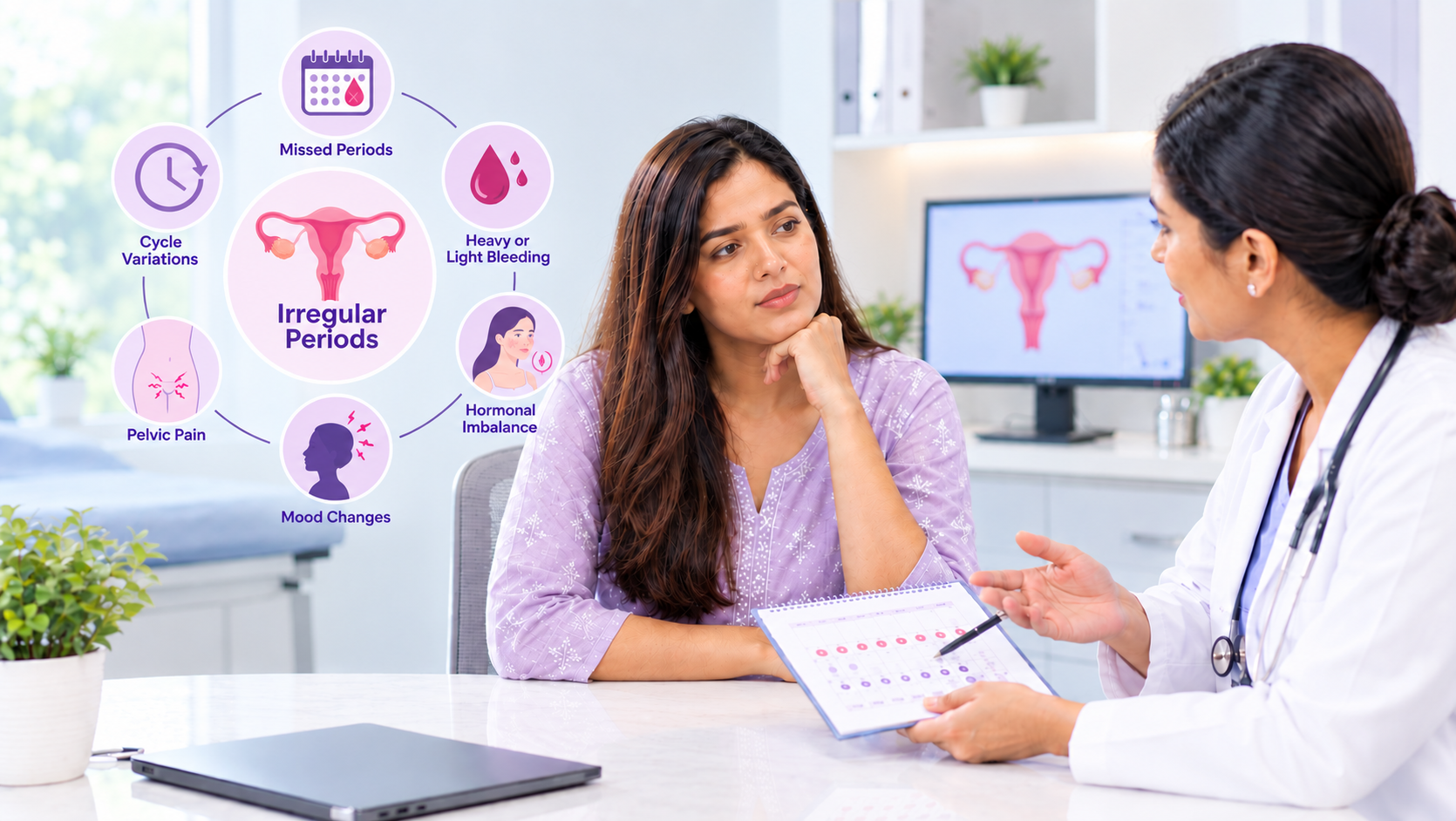
An irregular period generally means that the timing, frequency or pattern of menstruation is not consistent with the person’s usual cycle.
Changes may include:
- Periods arriving much earlier or later than expected
- Skipping periods
- Very infrequent periods
- Bleeding between periods
- Periods lasting unusually long
- Significant changes in the usual menstrual pattern
The cause matters because irregular periods can result from several different conditions.
Does Having Irregular Periods Mean I Have PCOS?
No.
PCOS is one possible cause of irregular periods, but it is not the only one.
Other possible causes can include:
- Pregnancy
- Stress
- Major weight change
- Excessive exercise
- Hormonal contraception
- Thyroid disorders
- Other hormonal conditions
- Perimenopause, depending on age
That is why self-diagnosing PCOS based only on irregular periods is not recommended.
What Is PCOS?
PCOS is a common hormonal and reproductive condition that can affect menstrual cycles, ovulation, androgen levels, fertility and metabolic health.
A woman with PCOS may experience:
- Irregular or infrequent periods
- Acne
- Increased facial or body hair
- Hair thinning
- Difficulty conceiving
- Weight-related concerns
- Other metabolic or psychological features
Importantly, symptoms vary considerably from person to person.
What Are the Common Signs of PCOS?
1. Irregular or Infrequent Periods
This is one of the symptoms that may lead women to seek a gynecologist for PCOS.
Some women may have long gaps between periods or may not ovulate regularly.
Common question:
“My period comes every 40–60 days. Could I have PCOS?”
It is possible, but irregular cycles alone are not enough to diagnose PCOS.
2. Excess Facial or Body Hair
Higher androgen activity can result in increased facial or body hair in some women with PCOS.
Examples include increased hair growth around:
- Chin
- Upper lip
- Chest
- Abdomen
This symptom can also have other causes, so it should be evaluated in context.
3. Acne or Oily Skin
Some women with PCOS experience acne or oily skin related to hormonal changes.
However, acne by itself does not mean a woman has PCOS.
4. Hair Thinning
Hair thinning or a widening part may occur in some women with hormonal disorders, including PCOS.
Again, several other conditions can cause hair loss, so proper evaluation matters.
5. Difficulty Getting Pregnant
PCOS can affect ovulation, which may make conception more difficult for some women.
Irregular periods can also make it harder to predict ovulation.
Common fertility question:
“Can I get pregnant if I have PCOS?”
Yes. PCOS does not mean that pregnancy is impossible. Some women with PCOS conceive naturally, while others may need medical support depending on their individual situation.
Can You Have PCOS Even If Your Periods Are Not Very Irregular?
PCOS can present differently in different women.
Diagnosis should not be based on one symptom alone.
The 2023 international evidence-based guideline explains that adult diagnosis involves specific combinations of ovulatory dysfunction, clinical/biochemical hyperandrogenism and polycystic ovaries or elevated AMH, after other causes have been excluded.
This is why an internet checklist cannot replace a gynecological evaluation.
How Is PCOS Diagnosed?
A gynecologist may consider:
1. Menstrual history
How frequently do periods occur? Have they changed recently?
2. Symptoms
Are there signs such as excess facial hair, acne or hair thinning?
3. Medical history
Are there other health conditions, medications or recent lifestyle changes?
4. Blood tests
Depending on the situation, hormone and other blood tests may be recommended.
5. Ultrasound
An ultrasound may be used as part of evaluation depending on the patient’s age and clinical presentation.
The current international guideline emphasises that diagnosis should follow appropriate diagnostic criteria and that other possible causes should be considered and excluded where appropriate.
Does Every Woman With PCOS Need the Same Treatment?
No.
PCOS treatment depends on the individual’s symptoms, reproductive goals and overall health.
For example, one woman may primarily need help with cycle irregularity, while another may be concerned about acne, excess hair, metabolic health or fertility.
The 2023 international guideline recommends management that considers reproductive, metabolic, cardiovascular, dermatological, sleep and psychological features when relevant.
This is why treatment should be individualised rather than based on a single “PCOS treatment” formula.
Can PCOS Affect Fertility?
Yes, PCOS can affect ovulation and therefore fertility in some women.
Irregular or absent ovulation can make conception more difficult, although many women with PCOS do become pregnant.
If you have irregular periods and are trying to conceive, a gynecologist can evaluate ovulation and other fertility factors rather than assuming PCOS is the only cause.
Colours Hospital’s Gynecology & Obstetrics department includes fertility evaluation, counselling and reproductive-health support.
Explore Fertility & Gynecology Care at Colours Hospital
What If I Have Irregular Periods but No Other Symptoms?
You may not need treatment immediately.
The right next step depends on:
- Your age
- How long the irregularity has continued
- How often your periods occur
- Whether pregnancy is possible
- Other symptoms
- Your medical history
- Whether you are trying to conceive
The NHS recommends medical evaluation for irregular periods, particularly when they persist or occur with other symptoms such as weight changes, tiredness, increased facial hair or fertility difficulty.
When Should I See a Gynecologist for Irregular Periods?
Arrange a consultation if:
- Your periods have become consistently irregular
- You frequently skip periods
- You have bleeding between periods
- Your periods are unusually heavy or prolonged
- You have increased facial or body hair
- You have persistent acne with cycle changes
- You are experiencing unexplained weight changes
- You are struggling to conceive
- Your menstrual pattern has changed significantly
A consultation does not automatically mean that you have PCOS.
It simply helps identify why your periods have changed.
Can Stress Cause Irregular Periods?
Yes.
Stress can affect menstrual cycles, along with factors such as significant weight changes and excessive exercise.
This does not mean every irregular period should be blamed on stress.
If changes continue or occur with other symptoms, medical evaluation is appropriate.
Can PCOS Be Completely Cured?
PCOS is generally considered a long-term condition that can be managed according to the person’s symptoms and health goals.
Treatment can focus on menstrual regularity, ovulation and fertility, metabolic health, acne or unwanted hair, and other individual concerns.
The goal is not simply to make one symptom disappear temporarily. A longer-term management plan may be more appropriate.
Does PCOS Always Cause Weight Gain?
No.
PCOS can affect women with different body sizes.
Weight alone cannot confirm or rule out PCOS.
This is important because a woman should not assume that she cannot have PCOS simply because she does not have overweight or obesity.
Can PCOS Affect Pregnancy?
PCOS can be relevant during pregnancy because it may be associated with certain pregnancy and metabolic risks.
For women with PCOS planning pregnancy, preconception counselling can help identify and address relevant health factors.
Colours Hospital provides preconception counselling, prenatal care and high-risk pregnancy management as part of its Gynecology & Obstetrics services.
Learn About Pregnancy & Obstetrics Care at Colours Hospital
What Questions Should I Ask My Gynecologist?
You can ask:
- “Why are my periods irregular?”
- “Could PCOS be one possible cause?”
- “Do I need blood tests?”
- “Would an ultrasound be useful?”
- “Could this affect my fertility?”
- “What can I do to make my periods more regular?”
- “Do I need treatment now or only monitoring?”
- “What should I do if I want to become pregnant?”
These questions can make your consultation more useful and help your doctor understand your main concerns.
Frequently Asked Questions
1. Are irregular periods always a sign of PCOS?
No. Pregnancy, stress, weight changes, hormonal contraception, thyroid disorders and other conditions can also cause irregular periods.
2. How do I know if my irregular periods are due to PCOS?
You cannot confirm PCOS from irregular periods alone. A gynecologist may consider your menstrual history, symptoms, hormone findings and, when appropriate, ultrasound or AMH, while excluding other possible causes.
3. What are the most common symptoms of PCOS?
Common features can include irregular or infrequent periods, signs of increased androgen activity such as excess facial hair or acne, and fertility difficulties. Not every woman has all of these symptoms.
4. Can I get pregnant with PCOS?
Yes. PCOS can affect ovulation, but pregnancy is possible. Some women conceive naturally, while others may need fertility support.
5. Can stress cause missed periods?
Stress can contribute to irregular menstrual cycles. Other causes should also be considered when the changes continue or are accompanied by additional symptoms.
6. When should I see a gynecologist for irregular periods?
Consider seeing a gynecologist when periods remain irregular, you frequently skip periods, experience bleeding between periods, have other hormonal symptoms or are having difficulty conceiving.
7. Does PCOS always cause weight gain?
No. PCOS can occur in women of different body sizes. Weight alone is not enough to diagnose or rule out PCOS.
8. What tests are done for PCOS?
Depending on the person, evaluation may include a medical history, menstrual and symptom assessment, blood tests and sometimes ultrasound. Adult diagnostic criteria involve specific clinical/biochemical findings rather than one single test.
9. Can PCOS affect fertility?
Yes. PCOS may interfere with regular ovulation and can make conception more difficult for some women. Fertility assessment can help identify appropriate options.
10. Is there treatment for PCOS?
Yes. Management is individualised and may address menstrual irregularity, fertility, metabolic health, acne, excess hair and other concerns depending on the patient.
When Should You Book a Gynecology Consultation?
Irregular periods are worth discussing when they become a pattern rather than an isolated change.
You do not need to assume that you have PCOS before seeing a gynecologist.
A proper evaluation can help identify whether the cause is PCOS, another hormonal issue, thyroid-related, stress-related, lifestyle-related or something else.
Colours Hospital provides gynecology and obstetrics care in Nagpur, including menstrual disorders, PCOS, hormonal imbalance, endometriosis, fertility counselling, preconception care and pregnancy management.
Book a Gynecology Consultation at Colours Hospital, Nagpur
About Colours Hospital
Colours Hospital is located at Ajni Square, Nagpur, and its current women’s-health services cover Gynecology & Obstetrics from reproductive health and menstrual concerns through pregnancy and postnatal care.
